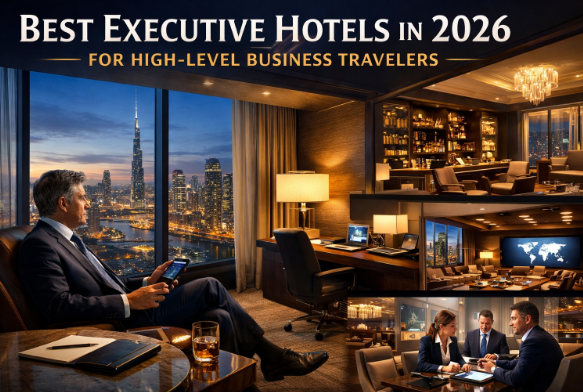
The modern landscape of executive business travel in 2026 is evolving rapidly as corporations expand globally and senior leaders require seamless environments that support productivity, privacy, and luxury. High-level business travelers are no longer satisfied with standard hotel accommodations. Instead, they increasingly demand executive hotels designed specifically for corporate decision-makers, offering advanced business facilities, secure communication infrastructure, personalized concierge services, and quiet spaces for strategic discussions best executive hotels in 2026. The rise of hybrid work models and international investment partnerships has significantly increased the need for premium accommodations tailored to executives.
According to recent hospitality industry insights, global business travel spending is expected to exceed $1.5 trillion by 2026, demonstrating the growing importance of hotels that specialize in executive services. In this environment, the best executive hotels for business travelers differentiate themselves by providing a combination of luxury hospitality and highly functional corporate amenities. Boardroom-ready meeting spaces, ultra-fast connectivity, private lounges, and executive floors have become essential elements of modern corporate hospitality. These hotels serve as strategic hubs where CEOs, entrepreneurs, and investors can conduct negotiations, finalize deals, and maintain productivity while traveling internationally.
The concept of executive hospitality has also expanded beyond traditional hotel services. Today’s leading business hotels offer AI-powered concierge services, smart room technology, biometric security systems, and personalized wellness programs designed to help executives maintain peak performance during demanding travel schedules. These innovations reflect a growing understanding that high-level business travelers require environments that support both professional efficiency and personal well-being. The best executive hotels in 2026 therefore combine luxury, technology, and strategic location to create an ideal ecosystem for corporate leadership.
What Defines a True Executive Hotel in 2026
Advanced Business Infrastructure
A defining feature of executive hotels for corporate travelers is the presence of advanced business infrastructure that supports high-stakes decision-making. Modern executives require meeting spaces that rival corporate headquarters, including soundproof boardrooms, high-definition teleconferencing technology, and secure digital communication networks. These hotels frequently feature dedicated executive business centers staffed by professional assistants who can provide translation services, document preparation, and confidential administrative support.
In addition to traditional meeting facilities, many executive hotels now integrate collaborative workspaces and private strategy suites designed for executive teams. These areas provide flexible environments where leaders can brainstorm, negotiate contracts, or conduct investor briefings without interruption. High-speed Wi-Fi with enterprise-level security has become a baseline expectation, while many premium hotels offer dedicated network connections specifically designed for corporate clients.
Personalized Executive Services
Executive hotels differentiate themselves through exceptional service standards. Personalized hospitality has become a critical element for high-level travelers who often operate on tight schedules. Many executive hotels provide 24-hour personal concierge teams, capable of coordinating transportation, booking exclusive restaurants, arranging private security, or securing last-minute meeting venues.
Another emerging trend in executive hospitality is predictive service technology, where hotel systems analyze guest preferences and automatically prepare rooms based on previous stays. Lighting settings, workspace arrangements, preferred beverages, and room temperatures can all be customized automatically before the executive even arrives. This level of personalization ensures that business travelers can immediately focus on strategic priorities rather than logistical details.
Top Executive Hotel Features That Business Leaders Expect
Executive Floors and Private Lounges
One of the most valued features of the best executive hotels in 2026 is the availability of exclusive executive floors and private lounges. These areas are reserved for high-level guests and provide quiet environments where professionals can work, relax, or conduct informal meetings. Executive lounges typically include premium dining options, dedicated workstations, and private meeting rooms designed for confidential discussions.
These spaces also serve as networking hubs where executives from different industries often interact. Conversations that begin in executive lounges frequently evolve into investment opportunities, partnerships, or collaborative ventures. This subtle networking environment is one of the reasons why executive travelers prefer hotels that prioritize corporate community spaces.
Smart Rooms for Productivity
Technology plays an increasingly significant role in executive hospitality. Smart hotel rooms allow business travelers to control lighting, temperature, and communication systems using voice commands or mobile apps. Many executive suites also feature integrated workstations with large screens, ergonomic seating, and seamless connectivity for laptops and mobile devices.
Modern executive rooms are designed with productivity in mind. Soundproof walls ensure privacy during video calls, while adjustable lighting systems reduce eye strain during long working hours. These thoughtful design elements allow executives to transform their hotel rooms into temporary offices that support efficient decision-making.
Leading Executive Hotels Around the World in 2026
The global hospitality industry is filled with outstanding hotels that cater specifically to corporate leaders. The following table highlights several renowned executive hotels known for exceptional service and business-oriented amenities.
| Hotel | Location | Key Executive Features |
|---|---|---|
| The Ritz-Carlton Tokyo | Tokyo, Japan | Executive club lounge, panoramic meeting suites, advanced business center |
| The Peninsula Hong Kong | Hong Kong | Luxury executive suites, private boardrooms, helicopter transfer service |
| Four Seasons Hotel New York Downtown | New York, USA | Executive business facilities, smart meeting technology, private lounges |
| The Shard Shangri-La London | London, UK | High-level meeting spaces, skyline executive suites, premium concierge |
| Mandarin Oriental Singapore | Singapore | Corporate conference facilities, executive lounge, luxury business suites |
These hotels represent the pinnacle of executive hospitality, combining exceptional service with advanced corporate infrastructure. Each property strategically positions itself within major financial districts or global business hubs, ensuring that executives can quickly access key commercial centers, international airports, and government institutions.
Strategic Locations for Business Travelers
Location remains one of the most important factors when selecting an executive hotel for corporate travel. High-level business travelers often choose hotels situated near financial districts, technology hubs, and international conference centers. Cities such as New York, London, Singapore, Tokyo, and Dubai continue to dominate global business travel rankings due to their strong economic influence and world-class hospitality infrastructure.
Hotels located in these cities benefit from proximity to multinational headquarters, major stock exchanges, and influential government institutions. This strategic positioning allows executives to minimize travel time while maximizing opportunities for meetings and networking. Additionally, many executive hotels offer private transportation services, including luxury car transfers and helicopter connections to major airports.
The Role of Wellness in Executive Hospitality
While productivity remains the primary focus of executive travel, wellness has become a critical component of modern hospitality design. Business leaders frequently face intense schedules, jet lag, and long working hours. Recognizing these challenges, the best executive hotels in 2026 have integrated comprehensive wellness programs into their service offerings.
Many executive hotels now feature state-of-the-art fitness centers, meditation rooms, spa facilities, and sleep optimization programs designed specifically for traveling professionals. Some properties even offer executive recovery programs, including guided yoga sessions, nutritional consultations, and personalized fitness training. These wellness services help executives maintain energy levels and mental clarity during demanding business trips.
Nutrition has also become an important aspect of executive hospitality. Hotels increasingly provide customized dining options designed for productivity, featuring balanced meals that support cognitive performance and sustained energy throughout the day. These thoughtful wellness initiatives demonstrate how executive hotels are evolving to support both professional success and personal well-being.
Technology Transforming Executive Hotel Experiences
Technology continues to reshape the hospitality industry, particularly within the executive travel segment. Artificial intelligence, automation, and data analytics are enabling hotels to deliver more personalized and efficient services than ever before. AI-powered concierge systems can instantly respond to guest requests, while predictive algorithms anticipate executive preferences based on previous stays.
Security technology has also become increasingly sophisticated. Many executive hotels now implement biometric access systems, encrypted communication networks, and private digital workspaces to protect sensitive business information. These security measures are particularly valuable for executives handling confidential negotiations or high-value corporate transactions.
Another technological advancement shaping executive hospitality is virtual collaboration infrastructure. Hotels now provide immersive video conferencing suites equipped with advanced audio-visual technology that allows executives to conduct global meetings without leaving the property. These capabilities make executive hotels not just places to stay, but fully functional extensions of corporate headquarters.
How Executive Hotels Support Global Business Growth
Executive hotels play a surprisingly significant role in facilitating global commerce. Many major business agreements are negotiated within hotel meeting rooms, lounges, and private dining spaces. By providing secure and professional environments for discussion, these hotels become critical platforms for international collaboration.
Large corporations frequently host investor briefings, leadership retreats, and strategic planning sessions within executive hotels because of their advanced facilities and professional service teams. Hotel staff are trained to support complex events, ensuring that every detail—from audiovisual equipment to catering—is managed flawlessly. This reliability allows corporate leaders to focus entirely on strategic discussions rather than logistical challenges.
Conclusion
The landscape of executive hotels for business travelers in 2026 reflects a broader transformation within global hospitality. As corporate travel becomes increasingly sophisticated, executives expect accommodations that deliver far more than traditional luxury. The best executive hotels combine advanced technology, strategic locations, personalized service, and wellness-focused design to create environments where business leaders can operate at peak performance.
From exclusive executive lounges to AI-powered concierge systems, these hotels are redefining what it means to support high-level corporate travel. They are no longer simply places to stay during a business trip. Instead, they function as dynamic corporate environments where negotiations occur, partnerships form, and global business strategies take shape. For executives navigating the complex world of international commerce, the right executive hotel can become an essential partner in achieving professional success.
FAQs
1. What makes an executive hotel different from a standard luxury hotel?
An executive hotel focuses specifically on the needs of corporate travelers by offering advanced business infrastructure, executive lounges, private meeting facilities, and personalized concierge services. While luxury hotels emphasize comfort and leisure, executive hotels prioritize productivity and professional support.
2. Which cities have the best executive hotels for business travelers?
Major global business hubs such as New York, London, Tokyo, Singapore, Hong Kong, and Dubai are widely recognized for hosting some of the world’s best executive hotels due to their proximity to financial districts and corporate headquarters.
3. Why do executives prefer hotels with executive lounges?
Executive lounges provide private environments where business leaders can work, hold informal meetings, and network with other professionals. These spaces often include premium amenities, dedicated workstations, and quiet areas for strategic discussions.
4. How is technology improving executive hotel services?
Hotels are increasingly using artificial intelligence, smart room technology, biometric security systems, and advanced video conferencing facilities to provide more efficient and personalized services for business travelers.
5. Are executive hotels suitable for long-term corporate stays?
Yes. Many executive hotels offer extended-stay suites with dedicated workspaces, personalized services, and access to corporate amenities, making them ideal for executives involved in long-term business projects or international assignments.
Read More :