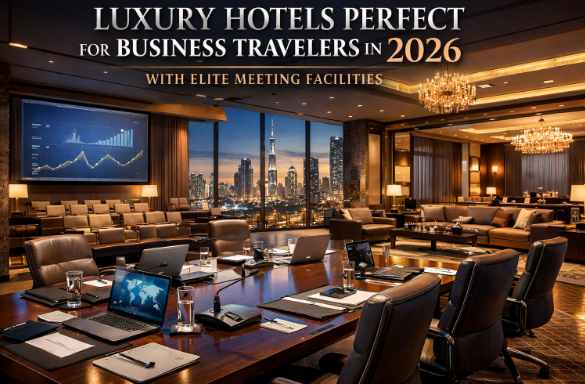
The landscape of luxury hotels for business travelers in 2026 is dramatically different from what it looked like a decade ago. Corporate travel has evolved from simple overnight stays into highly sophisticated experiences that blend productivity, comfort, and networking opportunities. Modern executives demand more than just a comfortable room; they expect seamless digital connectivity luxury hotels perfect for business, elite meeting facilities, and environments designed to enhance professional performance. As globalization continues to accelerate cross-border commerce, business travelers increasingly rely on high-end hotels that function as both accommodation and corporate headquarters.
The demand for these premium experiences is supported by significant growth in the global hospitality sector. The global luxury hotel market exceeded USD 118 billion in 2025 and continues expanding steadily through the next decade, driven by rising corporate travel demand and premium tourism experiences. Luxury hotel investments are increasing worldwide as brands compete to provide elite conference facilities, smart meeting technology, and sophisticated workspaces for executives.
At the same time, business travel spending is forecast to reach approximately $1.69 trillion globally in 2026, highlighting the enormous economic importance of corporate mobility. These figures reveal a clear trend: organizations are prioritizing strategic in-person meetings, leadership summits, and international conferences that require exceptional venues capable of delivering productivity and prestige simultaneously.
Global Business Travel Growth and Market Forecast
Corporate travel planners increasingly select luxury hotels because these properties offer the infrastructure needed for high-level meetings and executive events. Conferences, board meetings, and industry summits have returned strongly after pandemic disruptions, with meeting and event bookings rising by nearly 28% in 2024 alone. This growth indicates that businesses recognize the unmatched value of face-to-face collaboration.
Luxury hotels benefit from this trend by positioning themselves as fully integrated business ecosystems. Instead of functioning merely as accommodation providers, they operate as strategic hubs for networking, negotiation, and innovation. Large ballrooms equipped with immersive luxury hotels perfect for business, executive lounges designed for discreet conversations, and private meeting suites tailored for high-stakes negotiations all contribute to an environment where business can thrive.
Why Corporate Executives Prefer Luxury Hotels
Executives often choose luxury hotels because these properties provide a level of reliability, privacy, and service that standard hotels cannot match. When a multinational corporation hosts a strategic summit or investor meeting, every detail—from audiovisual performance to dining quality—must meet the highest standards. Luxury hotels invest heavily in these capabilities because they understand that corporate reputation often hinges on the success of these gatherings.
Another important factor is efficiency. Business travelers value locations that minimize friction between meetings, accommodation, and transportation. Many luxury hotels are strategically located near financial districts, convention centers, and international airports, making them ideal for executives with tight schedules. This strategic positioning allows professionals to move seamlessly between meetings, networking events, and relaxation without sacrificing productivity.
Key Features of Luxury Hotels Designed for Business Travelers
Elite Meeting Rooms and Smart Conference Spaces
One of the defining characteristics of luxury hotels tailored for business travelers is their advanced meeting infrastructure. Modern conference spaces go far beyond traditional boardrooms. Hotels now offer modular meeting suites equipped with smart screens, immersive audio systems, and advanced video conferencing technology capable of connecting teams across multiple continents simultaneously.
Large corporate events require venues that can accommodate hundreds of participants while maintaining a premium atmosphere. Luxury hotels address this demand by developing ballrooms with flexible layouts that can transform from conference halls into networking lounges or gala venues within hours. These dynamic spaces allow companies to host multi-day events that include presentations, workshops, and social gatherings under one roof.
Equally important is the availability of private executive meeting rooms designed for confidential discussions. High-level negotiations often require discretion, and luxury hotels provide soundproof meeting suites with dedicated service staff, ensuring that sensitive conversations remain secure.
High-Speed Connectivity and Digital Collaboration Tools
In the digital age, connectivity is the backbone of business travel. Luxury hotels invest heavily in high-speed internet infrastructure capable of supporting dozens—or even hundreds—of simultaneous video conferences without interruption. Fiber-optic networks, dedicated bandwidth for meeting spaces, and advanced cybersecurity protocols are now standard features in elite business hotels.
Beyond connectivity, many hotels incorporate digital collaboration platforms directly into their conference systems. Interactive touchscreens allow participants to annotate presentations in real time, while cloud-based document sharing enables seamless collaboration among attendees regardless of their location. These tools transform meeting spaces into dynamic innovation hubs where ideas can be shared instantly and decisions can be made efficiently.
Top Destinations for Luxury Business Hotels in 2026
Global Financial Cities Dominating Corporate Travel
Major financial centers remain the primary hubs for luxury business hotels with elite meeting facilities. Cities such as New York, London, Singapore, Dubai, and Tokyo host thousands of corporate events each year due to their strong economic ecosystems and world-class infrastructure. Luxury hotels in these cities cater specifically to executives, offering proximity to corporate headquarters, financial institutions, and government offices.
These destinations also benefit from extensive international flight networks, allowing business travelers to reach them quickly from virtually anywhere in the world. This accessibility makes them ideal locations for global conferences, investment summits, and multinational board meetings.
Emerging Business Travel Destinations
While traditional financial capitals dominate corporate travel, several emerging destinations are gaining attention among multinational organizations. Cities such as Bangkok, Seoul, Doha, and Mumbai are investing heavily in luxury hospitality infrastructure, including large convention centers and premium hotels designed for international business events.
These emerging hubs combine modern facilities with competitive pricing and unique cultural experiences, making them attractive alternatives for companies seeking distinctive conference venues.
Architectural Design That Enhances Productivity
Executive Suites Designed for Work Efficiency
The design philosophy of luxury business hotels has shifted significantly in recent years. Instead of focusing solely on aesthetics, architects now prioritize functionality and productivity. Executive suites are designed to function as private offices, complete with ergonomic workstations, high-resolution monitors, and advanced lighting systems that reduce eye strain during long working hours.
Large desks, integrated charging ports, and soundproof windows create an environment where executives can focus without distractions. Many suites also feature private meeting areas, allowing small groups to hold discussions without reserving larger conference rooms.
Quiet Zones and Private Workspaces
Beyond individual rooms, luxury hotels increasingly incorporate dedicated quiet zones where guests can work in a calm environment. These spaces resemble modern co-working offices but with the added elegance and comfort of a five-star hotel. Comfortable seating, natural lighting, and discreet service create an atmosphere conducive to productivity.
Some hotels even offer private library lounges where executives can review documents or prepare presentations in complete silence. These thoughtfully designed spaces reflect a deeper understanding of what business travelers truly need.
Technology Transforming Business Hotels in 2026
AI-Powered Guest Experience
Artificial intelligence is transforming the way luxury hotels serve corporate guests. AI-driven systems analyze guest preferences, automatically adjusting room temperature, lighting, and even meeting room configurations before the guest arrives. This level of personalization enhances comfort while reducing the time executives spend managing logistical details.
Hotels are also using AI to streamline event management. Automated scheduling tools coordinate meeting rooms, catering services, and technical support, ensuring that every element of a corporate event runs smoothly.
Smart Meeting Technology and Hybrid Event Platforms
Hybrid meetings—where some participants attend in person while others join remotely—have become a permanent feature of corporate events. Luxury hotels now integrate broadcast-quality streaming technology into their meeting spaces, enabling remote participants to engage fully with presentations and discussions.
These platforms include features such as real-time translation, interactive polling, and virtual networking lounges. By combining physical and digital experiences, luxury hotels ensure that business events remain inclusive and accessible.
Luxury Amenities That Appeal to Corporate Leaders
Wellness and Executive Lifestyle Services
Business travel can be exhausting, particularly for executives managing demanding schedules across multiple time zones. Luxury hotels address this challenge by offering wellness programs specifically designed for corporate guests. Spa treatments, meditation rooms, and fitness facilities allow travelers to recharge between meetings.
Many properties also offer personalized health services, including nutrition consultations and sleep optimization programs. These amenities recognize that executive performance depends heavily on physical and mental well-being.
Premium Dining and Networking Spaces
Fine dining plays an essential role in corporate hospitality. Luxury hotels feature Michelin-level restaurants and private dining rooms where executives can host clients or celebrate successful negotiations. These venues provide an elegant setting for relationship building, which remains a fundamental aspect of global business culture.
Networking lounges and rooftop bars further enhance the business travel experience by offering informal environments where professionals can connect and exchange ideas.
Comparing Elite Luxury Hotels for Business Meetings
| Feature | Luxury Business Hotels | Standard Hotels |
|---|---|---|
| Meeting Technology | AI-enabled smart conference systems | Basic AV equipment |
| Internet Infrastructure | Dedicated high-speed fiber networks | Shared standard Wi-Fi |
| Event Capacity | Large ballrooms and modular meeting halls | Limited meeting rooms |
| Executive Amenities | Private lounges, wellness programs | Basic leisure facilities |
| Business Support | On-site event planners and tech teams | Minimal business services |
This comparison illustrates why corporations increasingly choose luxury hotels when organizing major events. The combination of advanced technology, professional support, and sophisticated environments ensures a seamless experience for participants.
Sustainability and Corporate Responsibility in Luxury Hospitality
Modern corporations are increasingly concerned about environmental sustainability, and luxury hotels are responding by implementing eco-friendly practices. Energy-efficient buildings, renewable energy systems, and sustainable food sourcing have become central elements of high-end hospitality operations.
These initiatives align with corporate social responsibility goals, allowing companies to host events that reflect their commitment to environmental stewardship.
How Companies Choose Luxury Hotels for Conferences
Corporate event planners evaluate several factors when selecting a luxury hotel for business gatherings. Location, meeting capacity, technology infrastructure, and service quality are among the most critical considerations.
Another key factor is flexibility. Companies often require customized meeting layouts, specialized catering, and advanced security measures. Luxury hotels excel in these areas because they maintain dedicated event planning teams capable of tailoring every detail to client requirements.
Future Trends Shaping Luxury Business Hotels Beyond 2026
Looking ahead, the intersection of technology, design, and hospitality will continue transforming luxury business hotels. Artificial intelligence will play an increasingly central role in managing guest experiences, while immersive technologies such as augmented reality may enhance conference presentations and networking sessions.
Sustainability will also remain a major priority as hotels adopt carbon-neutral operations and environmentally responsible construction practices. As global business travel continues to expand, luxury hotels will evolve into multifunctional ecosystems that combine accommodation, innovation, and collaboration.
Conclusion
Luxury hotels designed for business travelers in 2026 represent the pinnacle of modern hospitality innovation. These properties combine elite meeting facilities, advanced technology, and exceptional service to create environments where executives can work, collaborate, and relax seamlessly. As corporate travel continues to grow and global connectivity strengthens, luxury hotels will remain essential hubs for international business activity.
Organizations seeking to host high-level meetings or conferences increasingly recognize the strategic value of these venues. By providing cutting-edge meeting technology, sophisticated workspaces, and world-class amenities, luxury hotels ensure that business events are not only productive but also memorable experiences.
FAQs
1. What makes a luxury hotel ideal for business travelers?
Luxury business hotels provide advanced meeting facilities, high-speed internet, executive lounges, and professional event planning services designed specifically for corporate travelers.
2. Why are meeting facilities important in luxury business hotels?
Elite meeting facilities allow companies to luxury hotels perfect for business host conferences, negotiations, and corporate events in professional environments equipped with modern technology and dedicated support teams.
3. Which cities are best for luxury business hotels in 2026?
Major financial hubs such as luxury hotels perfect for business New York, London, Dubai, Singapore, and Tokyo remain the top destinations for luxury business travel due to their strong economic infrastructure.
4. How is technology changing business hotels?
Artificial intelligence, hybrid meeting platforms, and smart conference systems are transforming luxury hotels into advanced collaboration spaces for luxury hotels perfect for business global business events.
5. Are luxury business hotels sustainable?
Many luxury hotels are adopting eco-friendly practices such as renewable energy, energy-efficient buildings, and sustainable food sourcing to luxury hotels perfect for business align with corporate sustainability goals.
Read More :