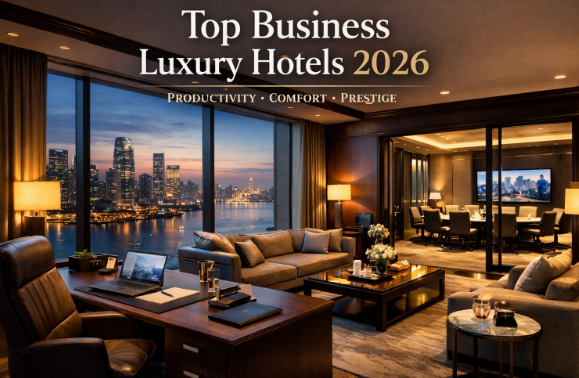
The modern global economy thrives on connectivity, collaboration, and rapid decision-making, which has significantly increased the demand for business luxury hotels in 2026 that combine productivity, comfort, and prestige in one seamless environment. Corporate leaders, entrepreneurs, and international executives now view hotels not simply as temporary accommodations but as dynamic workspaces designed to enhance efficiency, networking opportunities, and executive performance. As global business travel rebounds and evolves, luxury hospitality brands are redefining their offerings to attract professionals who require both high-performance infrastructure and sophisticated relaxation environments.
The luxury hotel industry has experienced remarkable growth in recent years as affluent travelers and corporate clients continue to prioritize personalized experiences and premium service standards. In fact, ultra-luxury hotels have recorded significant increases in average daily rates, with some properties charging more than $1,200 per night while maintaining strong occupancy levels, demonstrating the resilience of high-end hospitality demand. These impressive figures illustrate how luxury business hotels have become strategic hubs for international executives who value exclusivity, efficiency, and world-class amenities.
The concept of the business luxury hotel has evolved dramatically in 2026. Today’s properties blend five-star hospitality with high-performance work environments, offering features such as advanced conference centers, executive lounges, and smart suites designed specifically for productivity. Rather than separating work and leisure, these hotels integrate both elements seamlessly, enabling business travelers to conduct meetings, host networking events, and recharge physically and mentally within the same luxurious setting.
Luxury hospitality brands have recognized that business travelers are among the most valuable guests. These professionals often stay longer, spend more on premium services, and frequently return to the same properties when traveling for conferences or corporate meetings. As a result, hotel groups are investing heavily in technology, architectural innovation, and personalized services to create environments where executives can thrive.
Why Business Travelers Demand Luxury in 2026
Business travel in 2026 is no longer about simply finding a comfortable place to sleep between meetings. Corporate professionals increasingly seek hotels that support productivity, networking, and executive wellbeing throughout their stay. This shift has transformed luxury business hotels into strategic environments where work, collaboration, and relaxation coexist in perfect harmony.
Modern executives face intense schedules filled with back-to-back meetings, global video conferences, and strategic negotiations. In such demanding circumstances, the quality of the environment can significantly influence performance and decision-making. Research into workplace environments suggests that pleasant meeting spaces can increase perceived productivity by as much as 25 percent, highlighting the importance of well-designed business environments. Luxury hotels have embraced this insight by creating sophisticated meeting rooms, quiet lounges, and ergonomic workspaces tailored for professional success.
Another reason business travelers demand luxury accommodations is the importance of corporate prestige and brand image. Hosting partners, investors, or clients inside a world-class hotel sends a powerful message about credibility and professionalism. When a meeting takes place inside a renowned five-star property, the environment itself reinforces the seriousness and ambition of the discussion.
Luxury hotels also provide access to exceptional services that simplify business travel. Concierge teams arrange transportation, meeting facilities, and dining reservations, allowing executives to focus entirely on their professional objectives. This level of personalized service is particularly valuable for high-level corporate leaders who operate on tight schedules.
The Economic Power of Corporate Travel
Corporate travel remains one of the most influential drivers of the global hospitality industry. Multinational companies regularly send executives across continents to negotiate partnerships, attend conferences, and manage international operations. These activities generate enormous demand for premium accommodations that can support both business activities and luxury living standards.
Luxury hotels strategically position themselves in major financial centers such as Hong Kong, Singapore, New York, London, Dubai, and Tokyo, ensuring proximity to corporate headquarters, international airports, and convention centers. This strategic location allows business travelers to maximize efficiency during their trips while maintaining access to the world’s most influential business networks.
Industry analysts consistently identify business travelers as one of the most profitable segments in the hotel sector. These guests often require larger suites, private meeting rooms, and premium dining experiences, which significantly increase overall spending per stay. For hotel operators, attracting corporate clients represents a reliable and lucrative revenue stream.
Another economic advantage lies in the recurring nature of corporate travel. Executives frequently return to the same cities for meetings or conferences, creating long-term relationships between hotels and corporate clients. Many luxury brands have developed loyalty programs specifically designed for business travelers, offering benefits such as priority upgrades, executive lounge access, and personalized concierge services.
Key Features That Define a Top Business Luxury Hotel
The most successful business luxury hotels in 2026 share several defining characteristics that distinguish them from traditional accommodations. These properties prioritize productivity, connectivity, and comfort, creating environments where executives can perform at their best.
Advanced Meeting and Conference Facilities
One of the most essential features of any business luxury hotel is a comprehensive conference infrastructure capable of hosting events ranging from private executive meetings to large international summits. Modern conference hotels include flexible meeting spaces, advanced audiovisual systems, and integrated video conferencing technologies that enable hybrid events with global participation.
These facilities often include modular rooms with movable walls, allowing hotels to adapt quickly to different meeting formats. A boardroom designed for a strategic negotiation can easily transform into a conference hall for hundreds of attendees. This flexibility makes luxury business hotels ideal venues for corporate events, product launches, and industry summits.
Smart Technology and High-Speed Connectivity
Technology is the backbone of productivity in business hotels. High-speed internet connectivity is no longer a luxury—it is an essential utility for corporate guests who rely on seamless digital communication. In response, leading luxury hotels have invested heavily in fiber-optic networks, secure enterprise Wi-Fi systems, and digital meeting platforms.
Many properties now provide smart hotel rooms equipped with voice-controlled lighting, automated climate systems, and integrated workspace technology. These innovations allow guests to customize their environment instantly, creating optimal conditions for work and relaxation.
Premium Wellness and Executive Comfort
Corporate productivity depends heavily on physical and mental wellbeing. Luxury business hotels recognize this connection and therefore provide extensive wellness facilities designed to rejuvenate guests after demanding work schedules.
Executive travelers frequently take advantage of spa services, high-end fitness centers, and wellness programs that include yoga sessions, meditation spaces, and personalized nutrition menus. These services help reduce stress and improve focus, allowing professionals to maintain peak performance throughout their business trips.
Leading Luxury Hotel Brands Preferred by Business Travelers
Several global hotel brands have established themselves as leaders in the business luxury hospitality sector.
| Hotel Brand | Key Strengths | Global Presence |
|---|---|---|
| The Ritz-Carlton | Iconic luxury service and executive lounges | Worldwide |
| JW Marriott | Large conference facilities and corporate services | Global |
| Shangri-La | Asian luxury hospitality and executive comfort | Asia & Global |
| InterContinental | Business travel infrastructure and loyalty programs | Worldwide |
| Grand Hyatt | Modern business hotels with advanced technology | Global |
These brands consistently rank among the top hotel groups for business travelers, offering exceptional service, high-quality facilities, and strategic locations in major financial centers.
Top Business Luxury Hotels in 2026 Around the World
Several individual hotels stand out as premier destinations for corporate travelers in 2026.
Rosewood Hong Kong
Rosewood Hong Kong represents one of the most prestigious luxury hotels for business travelers. Rising above Victoria Harbour, the property offers breathtaking skyline views, residential-style suites, and world-class meeting facilities designed for executive gatherings.
Capella Bangkok
Located along the Chao Phraya River, Capella Bangkok combines boutique elegance with advanced hospitality services. Its private meeting spaces and refined atmosphere make it an ideal destination for high-level negotiations and corporate retreats.
Raffles Singapore
Raffles Singapore remains one of the most iconic business hotels in Asia. The historic property blends colonial architecture with modern executive facilities, offering a prestigious setting for international corporate meetings.
Park Hyatt Tokyo
Park Hyatt Tokyo continues to attract global executives thanks to its refined design, discreet service, and strategic location in one of Asia’s most powerful business capitals.
The Langham Jakarta
The Langham Jakarta stands as one of Southeast Asia’s most impressive luxury hotels, offering panoramic city views, elegant suites, and world-class meeting facilities for business travelers.
Business Productivity Inside Luxury Hotels
The Rise of Work-Integrated Suites
Luxury hotels in 2026 increasingly design suites that function as both living spaces and executive offices. These work-integrated suites include ergonomic desks, private meeting areas, and advanced digital connectivity to support professional tasks.
Conference Infrastructure Designed for Global Collaboration
Corporate events often require hybrid participation from international teams. Luxury hotels now offer high-definition video conferencing studios, real-time translation systems, and dedicated event managers who coordinate complex global meetings.
Technology Transforming Business Hospitality in 2026
Technology continues to reshape the luxury hotel industry by enabling faster service, personalized guest experiences, and enhanced operational efficiency. Mobile check-in systems allow executives to bypass traditional reception desks, while digital concierge platforms provide instant access to hotel services.
Artificial intelligence is also transforming hospitality operations. Some luxury hotels now use predictive analytics to anticipate guest preferences, ensuring that rooms are prepared exactly according to individual needs.
Luxury Hospitality Trends Shaping Corporate Travel
Luxury hospitality trends in 2026 emphasize privacy, personalized experiences, and “quiet luxury,” where elegance is expressed through subtle design rather than extravagant displays. This trend resonates strongly with corporate travelers who value discretion and exclusivity.
Another emerging trend is the integration of cultural experiences within luxury hotels. Many properties collaborate with local artists, chefs, and designers to create authentic environments that reflect the character of their destination.
How to Choose the Right Business Luxury Hotel
Selecting the ideal luxury hotel for business travel involves evaluating several factors:
- Location near financial districts or convention centers
- Availability of executive lounges and meeting rooms
- High-speed secure internet connectivity
- Professional event coordination services
- Wellness and relaxation facilities
Business travelers should also consider the hotel’s reputation, brand reliability, and previous reviews from corporate clients.
Conclusion
Luxury business hotels in 2026 have evolved far beyond traditional hospitality. They now function as sophisticated ecosystems where productivity, comfort, and prestige coexist in perfect balance. From advanced meeting facilities to personalized concierge services, these properties enable executives to conduct business efficiently while enjoying the finest standards of luxury living.
As global commerce continues to expand, the importance of high-performance business accommodations will only increase. The world’s leading luxury hotels are responding by investing in innovative technology, architectural excellence, and tailored guest experiences designed specifically for corporate travelers.
For professionals seeking environments that enhance both productivity and wellbeing, the top business luxury hotels of 2026 offer the ultimate destination.
FAQs
1. What defines a luxury business hotel?
A luxury business hotel combines five-star hospitality with advanced corporate facilities such as conference rooms, high-speed connectivity, executive lounges, and professional event services.
2. Why do executives prefer luxury hotels for business travel?
Luxury hotels provide professional meeting environments, premium comfort, and concierge services that simplify travel logistics for busy professionals.
3. Which hotel brands are best for business travelers?
Popular luxury brands for corporate travel include The Ritz-Carlton, JW Marriott, Shangri-La, InterContinental, and Grand Hyatt.
4. What amenities are essential in business hotels?
Essential amenities include high-speed internet, meeting rooms, business centers, conference facilities, and 24-hour room service.
5. Are luxury business hotels worth the cost?
For executives and companies conducting important meetings or negotiations, the productivity benefits and prestige of luxury hotels often justify the investment.
Read More :