Booking a luxury flight can feel like trying to buy a diamond in a room with no price tags. One day a business class seat looks expensive but possible, and the next day the same seat costs more than a luxury hotel week in Dubai, Paris, or Singapore. That is why a smart luxury flight booking guide is useful for travelers who want premium comfort without paying the highest possible fare. Premium seats are not always cheap, but they are often more flexible than people think when you understand timing, tools, routes, miles, upgrades, and airline pricing behavior.
The demand for premium air travel remains strong. IATA reported that total air travel demand grew 5.3% in 2025, with international demand up 7.1%, which means airlines are still dealing with strong passenger volumes and capacity pressure. That matters because premium cabins are limited by design; there are only so many business class and first class seats on each aircraft. When demand rises and supply stays tight, premium fares can move quickly.
The good news is that travelers can still find premium seats at better prices by booking smarter. Google Flights offers tools such as price tracking, date grids, price graphs, and cabin-class filters that help travelers compare fare patterns instead of guessing blindly. These tools are especially useful for premium cabins because business class and first class prices can swing dramatically by date, route, airline, and aircraft.
Why Premium Seats Cost More Than Ever ( Luxury Flight Booking )
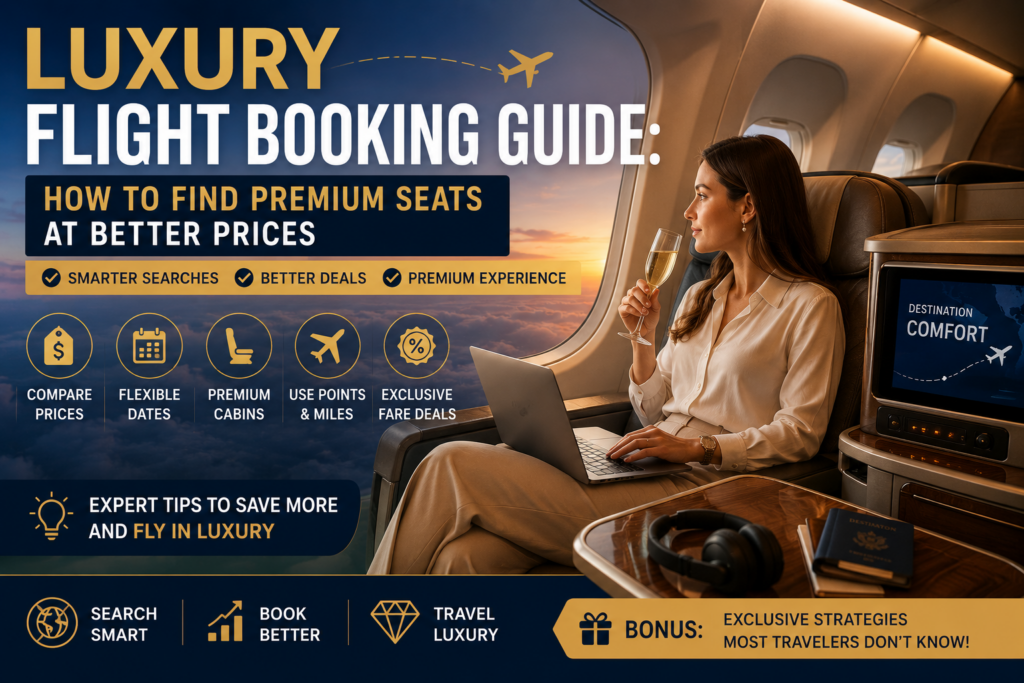
Premium seats are expensive because they sell more than transportation. A business class or first class ticket usually includes a larger seat, more privacy, priority airport services, lounge access, better food, more baggage allowance, and a higher level of service. On long-haul routes, the seat itself can become a real bed, which turns a stressful overnight flight into productive rest. For executives, honeymoon couples, luxury travelers, and frequent flyers, that comfort can be worth a lot.
Airlines also know that premium cabins generate high-value revenue. Premium economy and business class seats occupy more aircraft space, but they can produce stronger returns per passenger than economy seats. That is why many airlines are investing in better premium cabins, more suite-style business class seats, and expanded premium economy cabins. The market is moving toward travelers who are willing to pay more for comfort, privacy, and flexibility.
Recent fare forecasts also show why premium cabin planning matters. American Express Global Business Travel’s Air Monitor 2026 noted that premium economy fares are especially popular on transatlantic routes, where demand is outpacing supply and creating modest price increases. The same report said business class fare growth is expected to be more limited in some markets, which means careful route selection can still uncover better-value premium fares.
Understand the Difference Between Premium Economy, Business Class, and First Class
Before searching for premium flight deals, travelers need to understand what they are actually buying. Premium economy is usually a wider seat with extra legroom, better recline, improved meals, priority boarding, and sometimes enhanced baggage. It is not a lie-flat experience, but it can be a smart upgrade on daytime flights or medium-haul routes. For travelers who want comfort without the full business class price, premium economy can be the sweet spot.
Business class is the strongest all-around premium cabin for most luxury travelers. On long-haul international routes, business class often includes lie-flat seats, aisle access, airport lounge entry, premium meals, better bedding, and priority services. This is the cabin most travelers should focus on when they want real comfort at a more reasonable price than first class. Business class is especially valuable for overnight flights because sleep quality changes the entire arrival experience.
First class is the most exclusive commercial cabin, but it is becoming less common on many airlines. True first class may include private suites, fine dining, luxury bedding, chauffeur service, onboard showers on selected aircraft, and ultra-premium lounge access. However, first class is not always worth the extra money if a strong business class product is available for much less. The smartest luxury travelers compare the actual seat, aircraft, route, and onboard service instead of assuming first class is always the best value.
Use Google Flights Like a Premium Fare Scanner ( Luxury Flight Booking )
Google Flights is one of the easiest tools for finding better premium seat prices because it allows travelers to compare cabin classes, track fares, and test flexible dates. Google’s own travel help explains that users can choose cabin class, stops, ticket numbers, and specific routes, then track prices for a route or flight. This is especially useful for premium cabins because prices often drop temporarily before rising again.
The smartest approach is to search business class or first class as early as possible, then use the date grid and price graph to identify cheaper departure days. Premium fares often behave differently from economy fares. A Tuesday departure may be thousands of dollars cheaper than a Sunday departure, while a one-stop itinerary may cost far less than a nonstop flight. If your dates are flexible, the savings can be huge.
Travelers should also use “anywhere” or open-destination searches when planning luxury vacations. Google Flights promotes flexible tools that help users find cheaper days, compare trends, and track price changes. For travelers who want a luxury trip but have not chosen the destination yet, this can reveal premium cabin bargains to unexpected cities.
Book During Fare Sales, but Do Not Wait Forever ( Luxury Flight Booking )
Premium cabin fare sales exist, but they are not always loud. Airlines may quietly reduce business class fares on routes where demand is soft, competition is strong, or seats remain unsold. These deals can appear on airline websites, Google Flights, online travel agencies, or premium fare alert services. The key is to monitor prices before you are ready to book, so you know what counts as a real deal.
Waiting too long can be risky because premium cabin inventory is limited. Economy cabins may have hundreds of seats, but business class may have only 20 to 60 seats depending on the aircraft. First class may have fewer than 10 seats or may not exist at all. Once discounted premium inventory sells out, the next fare bucket can be much more expensive.
A good rule is simple: track prices early, know your target fare, and book when the price reaches a level you would be happy paying. Do not chase perfection. Premium flight booking is more like fishing than shopping; sometimes the best catch appears briefly, and waiting for an even better one means missing the deal entirely.
Be Flexible With Airports and Routes ( Luxury Flight Booking )
One of the best ways to find premium seats at better prices is to search nearby airports. A business class ticket from one city may cost far more than the same airline from a neighboring city. For example, flying from New York instead of Philadelphia, Milan instead of Rome, Singapore instead of Jakarta, or Abu Dhabi instead of Dubai may change the fare dramatically. Airlines price tickets based on competition, demand, taxes, and local market behavior.
Connecting flights can also unlock better premium prices. A nonstop flight is convenient, but it is often more expensive because business travelers value speed. A one-stop itinerary may save a large amount, especially when the connecting airport is a major airline hub. For leisure luxury travelers, a slightly longer route can be worth it if it unlocks a better cabin at a much lower price.
Travelers should also compare mixed-cabin itineraries carefully. Sometimes a fare includes business class on the long-haul segment but economy on a short connecting flight. That may still be a great deal if the long flight is where comfort matters most. However, always check the full itinerary before booking because some “business class” fares may include only short premium segments and economy on the longest flight.
Use Points and Miles for Premium Cabin Value
Points and miles can be one of the best ways to book luxury flights at lower cash prices. Instead of paying thousands of dollars for business class or first class, travelers can redeem airline miles, credit card points, or transferable rewards. This strategy works best when travelers are flexible with dates, routes, and airlines.
Some loyalty programs still use award charts or partner pricing, while others use dynamic pricing that changes based on demand. AwardTravelFinder’s 2026 award chart overview notes that not all airlines still use award charts, and many have moved to dynamic pricing, while programs such as ANA, Aeroplan, Alaska, and British Airways still publish fixed charts for some partner awards. This matters because fixed partner pricing can sometimes offer predictable premium cabin value.
The best strategy is to search award availability before transferring credit card points. Many points transfers are irreversible, so travelers should confirm seats first whenever possible. If a program allows award holds, that can be even better. Premium cabin award seats can disappear quickly, especially on famous first class products and popular honeymoon routes.
Watch for Upgrade Opportunities After Booking
Sometimes the best premium seat price appears after you buy an economy, premium economy, or business class ticket. Airlines may offer paid upgrades through the booking page, mobile app, check-in screen, or email. These upgrade offers can be cheaper than buying the higher cabin outright, but they vary by airline, route, status, and seat availability.
Upgrade bidding is another useful strategy. Some airlines allow passengers to bid for premium economy or business class upgrades before departure. You choose the amount you are willing to pay, and the airline accepts or rejects the bid based on remaining premium cabin inventory. This can be a smart option when the original premium fare is too expensive but you are willing to pay a smaller amount for comfort.
Loyalty status can also improve upgrade chances. Frequent flyers with elite status may receive complimentary upgrades, priority on upgrade waitlists, or better paid upgrade offers. However, relying on upgrades is risky for important trips. If you truly need a lie-flat seat before a major meeting, wedding, or special event, booking the premium cabin directly is safer than hoping for an upgrade.
Compare Airline Websites, OTAs, and Travel Advisors
A luxury flight booking guide would not be complete without discussing where to buy. Airline websites are often the safest place to book because they provide direct support, clear baggage rules, easier schedule-change handling, and better upgrade visibility. If something goes wrong, dealing directly with the airline is usually simpler than going through a third party.
Online travel agencies can sometimes show lower fares or package discounts, especially when combining flights and hotels. However, travelers should check fare rules carefully. Some third-party tickets may be harder to change, cancel, upgrade, or manage during disruptions. For expensive premium cabin tickets, service quality after booking matters almost as much as the fare.
Luxury travel advisors can be useful for complicated premium trips. Advisors may access negotiated fares, private deals, hotel-and-flight packages, corporate rates, or value-added benefits. This is especially relevant for honeymoons, executive travel, multi-city itineraries, and first class journeys where mistakes can be expensive. A good advisor does not only sell a ticket; they help protect the experience.
Travel During Shoulder Seasons
Premium cabin prices often drop when demand softens. The best time to find better premium seat prices is usually outside major holidays, school breaks, mega-events, and peak business travel windows. Shoulder seasons vary by destination, but they often sit between high and low seasons. Europe can be better in spring or fall, tropical destinations may be cheaper outside festive periods, and long-haul routes may soften after major holiday peaks.
Business routes have their own rhythm. Monday mornings, Thursday evenings, and Sunday returns can be expensive because executives and consultants travel around the workweek. Leisure premium routes may spike around Fridays, Saturdays, and holiday periods. If you can fly midweek, you may find noticeably better premium cabin fares.
This is where date flexibility becomes powerful. Moving your trip by one or two days can sometimes save more than changing airlines. For luxury travelers, that saving can be redirected into a better hotel, private transfer, fine dining experience, or longer trip.
Consider Premium Economy as a Strategic Step ( Luxury Flight Booking )
Premium economy is not as glamorous as business class, but it can be a very smart booking strategy. It often costs much less than business class while still offering more comfort than economy. On daytime flights, shorter long-haul routes, or trips where sleep is less important, premium economy may be the best value.
Premium economy can also improve upgrade potential. Some airlines make it easier to upgrade from premium economy to business class than from economy to business class. This is not guaranteed, but it can be a useful strategy for travelers who want a better seat now and a possible upgrade later.
Because premium economy demand is growing, travelers should still compare prices early. The American Express Global Business Travel forecast noted that premium economy demand on transatlantic routes has been strong enough to outpace supply and push modest fare increases. That means premium economy is no longer a hidden secret, but it can still be a strong value when booked intelligently.
Check Aircraft Type Before Booking
Not all premium seats are equal. A business class seat on one aircraft may be a private suite with closing doors, while another may be an older angled seat with less privacy. A first class product on one route may feel extraordinary, while another airline’s first class may simply feel like a larger business class seat. This is why checking the aircraft type matters.
Before booking, look at the seat map, aircraft model, airline cabin page, and recent traveler reviews. Search for terms such as “A350 business class,” “777 first class suite,” “A380 business class,” or “787 premium economy.” The aircraft can completely change the value of the fare. Paying more for a much better seat may be worth it, while paying a premium for an outdated product may not be.
Travelers should also watch for aircraft swaps. Airlines can change aircraft before departure, which may affect the seat type. This is another reason to book directly with the airline or through a strong travel advisor when purchasing expensive premium cabin tickets.
Use Stopovers to Increase Luxury Value
A stopover can turn a flight deal into a better travel experience. Instead of connecting quickly through a hub, travelers can spend one or two nights in the connecting city. This is especially useful when flying through luxury hubs such as Doha, Dubai, Singapore, Istanbul, Abu Dhabi, Hong Kong, or Tokyo. A stopover can break up a long journey and make the premium fare feel more valuable.
Some airlines and destinations promote stopover programs with hotel discounts, tours, or package benefits. Even when no official stopover deal exists, travelers can build their own by using multi-city search tools. This may not always reduce the fare, but it can increase the overall value of the trip.
For honeymooners and luxury travelers, stopovers can be especially appealing. A couple flying from the United States to the Maldives might enjoy two nights in Dubai or Doha before continuing. An executive flying to Australia might stop in Singapore to recover before meetings. Comfort is not only about the seat; it is about designing the journey intelligently.
Avoid Common Premium Booking Mistakes ( Luxury Flight Booking )
The biggest mistake travelers make is assuming all premium fares include the same benefits. Some business class fares may restrict lounge access, seat selection, refunds, or upgrades depending on the airline and fare family. Some first class fares may not include chauffeur service on every route. Some premium economy fares may be closer to extra-legroom economy than a true premium cabin experience.
Another common mistake is ignoring total trip cost. A cheaper premium fare with bad connections, long layovers, airport changes, or poor arrival times may not be the best deal. A slightly higher fare that arrives rested, on time, and closer to your hotel may be more valuable. Luxury travel should be measured by experience, not just ticket price.
Travelers should also avoid transferring points before confirming award space. This mistake can trap points in a program with no usable seats. Always search availability first, understand taxes and fees, and confirm transfer times. Premium award booking rewards patience, but punishes rushed decisions.
Best Luxury Flight Booking Strategy
The best strategy is to combine cash fare tracking, flexible routing, points, upgrade monitoring, and aircraft research. Start with Google Flights to understand normal premium cabin prices on your route. Set price alerts for business class, premium economy, and first class. Search nearby airports and flexible dates. Compare airline websites and reputable travel agencies. Then check whether points or miles can beat the cash fare.
Once you find a good premium fare, evaluate the full experience. Is the seat lie-flat? Is lounge access included? Is the aircraft modern? Are the connection times reasonable? Is the ticket changeable? Does the arrival time fit your hotel check-in or meeting schedule? A cheap premium ticket is only a good deal if it supports the trip you actually want.
For travelers booking luxury vacations, honeymoons, or executive trips, the goal is not always the absolute lowest price. The goal is the best balance of comfort, value, reliability, and timing. A premium seat at a better price should still feel premium when you actually fly.
Conclusion
Finding premium seats at better prices is possible, but it requires strategy. A strong luxury flight booking guide starts with understanding cabin types, monitoring fares, using flexible dates, comparing airports, checking aircraft, and using points or miles wisely. Premium cabin prices may remain strong because global air travel demand is high, but that does not mean every traveler must pay the highest fare. Smart search habits can uncover better business class, premium economy, and first class opportunities.
The best way to book luxury flights for less is to think like both a traveler and an airline. Airlines price seats based on demand, competition, timing, inventory, and route behavior. When you learn how those pieces move, you stop guessing and start booking with confidence. Whether you are flying for business, a honeymoon, a family celebration, or a once-in-a-lifetime trip, the right premium seat can turn travel time into comfort time. Book carefully, compare intelligently, and let the journey feel as good as the destination.
FAQs
1. What is the best way to find premium seats at better prices?
The best way is to use flexible dates, compare nearby airports, track prices, search multiple cabin classes, and check both cash fares and points redemptions. Google Flights is useful because it offers price tracking, date grids, price graphs, and cabin-class filters.
2. Is business class cheaper if booked early?
Business class can be cheaper when booked early, but not always. Airlines may release discounted premium fares during sales or when demand is soft. The smartest approach is to track fares early, know the normal price range, and book when the fare drops to a good level.
3. Can points and miles really save money on luxury flights?
Yes, points and miles can offer strong value for business class and first class flights, especially on long-haul routes. However, award availability can be limited, and some airlines use dynamic pricing. Always confirm available seats before transferring credit card points.
4. Is premium economy worth it compared with business class?
Premium economy is worth it when business class is too expensive or when the flight is daytime, medium-haul, or not long enough to justify a lie-flat seat. Business class is usually better for overnight long-haul flights because sleep quality matters more.
5. Should I book premium flights through an airline or travel agency?
Booking directly with the airline is usually safer for changes, upgrades, and disruption handling. A reputable luxury travel advisor can be better for complex trips, honeymoon packages, multi-city itineraries, and premium fare planning. Online travel agencies may show cheaper fares, but always check restrictions carefully.